Solutions at Hackathon 2026
REBUILD GREEN
2030
Winner · 1st PlaceRebuild Green Hackathon 2026

Rebuild Green Hackathon 2026 · Top 3 Projects

Lviv, Ukraine

Lviv Medical Resource Hub

Rethinking Healthcare Waste as a Sustainable Resource System
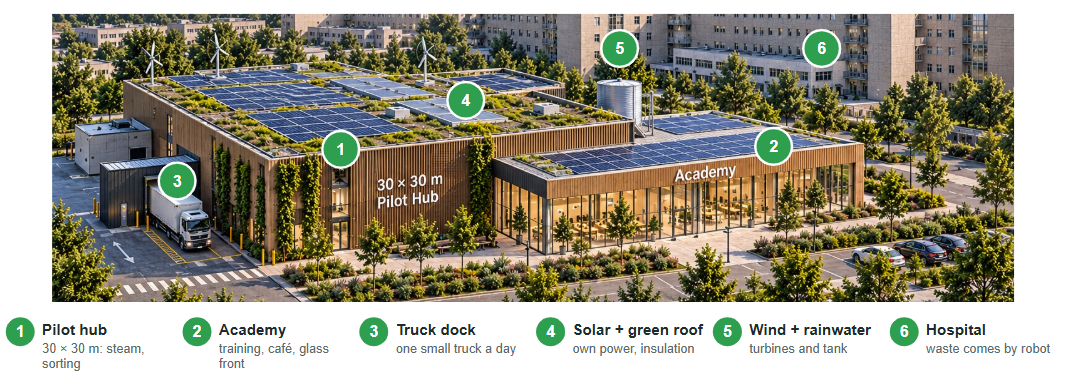
Project imageVisualization of the Lviv Medical Resource Hub

Lviv's finalist project addresses one of the overlooked challenges of sustainable healthcare: the safe, transparent and resource-efficient management of medical waste.

The Challenge

Healthcare institutions generate complex waste streams that require careful separation, traceability and safe treatment. Inefficient handling creates environmental risks and limits opportunities for responsible resource recovery.

The Proposed Solution

The Lviv Medical Resource Hub proposes an integrated system combining waste separation, digital tracking, steam-based treatment, material recovery and staff training.

Rather than treating medical waste management as an isolated disposal process, the project approaches it as a coordinated system connecting healthcare facilities, treatment infrastructure and environmental responsibility.

Expected Impact

A safer and more transparent medical-waste management model that supports circular-economy practices and could be adapted by other Ukrainian healthcare institutions.
  • Circular Healthcare
  • Digital Traceability
  • Resource Recovery

2nd Place

Zhytomyr, Ukraine

The Yard Restart

Transforming Aging Housing into Resilient Neighbourhoods

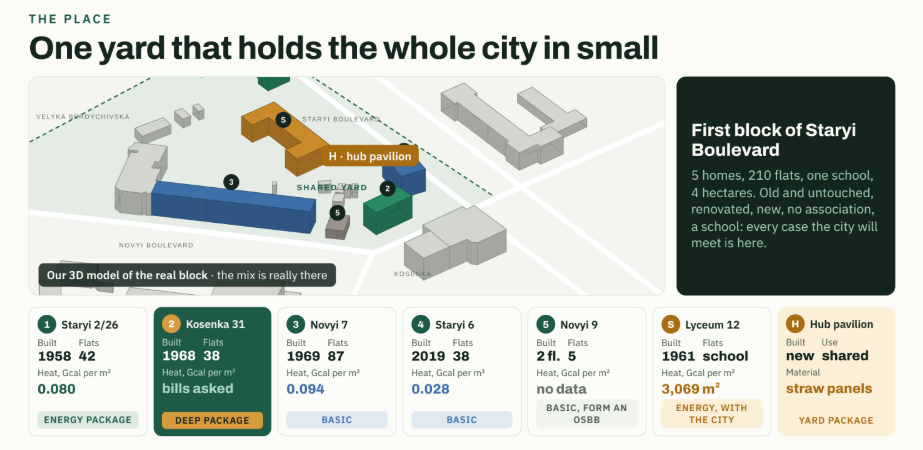
Project imageVisualization of The Yard Restart neighbourhood in Zhytomyr

The Yard Restart explores how existing residential neighbourhoods can be renewed through an integrated approach that improves buildings, shared spaces and everyday community life.

The Challenge

Aging residential buildings face increasing challenges related to energy performance, accessibility, deteriorating infrastructure and the quality of communal spaces.

Renovation must address not only individual buildings, but also the relationship between homes, public space and residents.

The Proposed Solution

The project introduces a neighbourhood-scale renovation pilot involving five residential buildings and one school, with approximately 210 apartments in the proposed area.

The concept combines energy-efficient building upgrades, improved accessibility, redesigned courtyards, shared community spaces and resident participation.

Rather than treating renovation as a series of isolated interventions, The Yard Restart develops a coordinated and potentially replicable model for neighbourhood regeneration.

Expected Impact

A practical pathway for renewing Ukraine's aging housing stock while strengthening energy resilience, accessibility, community participation and the quality of everyday life.

  • Housing Renovation
  • Energy Resilience
  • Neighbourhood Regeneration

3rd Place

Helendzhyk · Mykhailo-Lukashivska Community, Ukraine

Veteran Reintegration Ecosystem

Creating a Place for Recovery, Belonging and New Opportunities

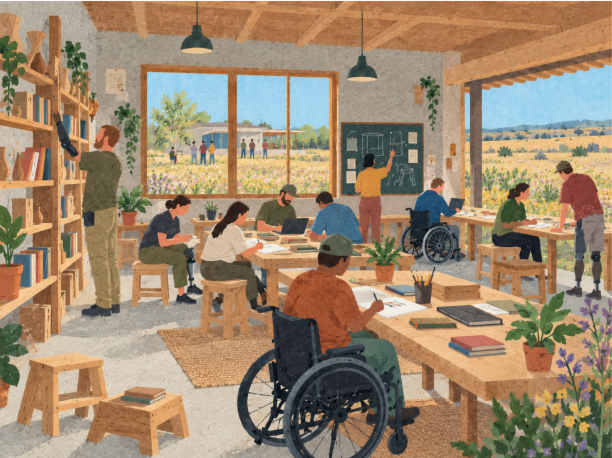
Project imageVisualization of the Veteran Reintegration Ecosystem in Helendzhyk

The project reimagines Helendzhyk as a supportive living environment where veterans, their families and the wider community can reconnect, recover and build sustainable futures.

The Challenge

Veteran reintegration requires more than individual services. It calls for accessible places to live, opportunities to develop new skills, psychological and social support, and meaningful connections with the surrounding community.

The Proposed Solution

The Veteran Reintegration Ecosystem brings together accessible housing, a community-based veterans' support centre, therapeutic green spaces, shared gardens and opportunities for education, training and employment.

Its integrated approach connects architecture, landscape, social infrastructure and local economic development into a coherent vision for community recovery.

Expected Impact

An inclusive environment that supports veterans' independence, social participation and long-term reintegration while strengthening the resilience of the local community.

  • Veteran Reintegration
  • Inclusive Housing
  • Community Resilience

Rebuild Green Hackathon 2026

Places 4–7

Four additional projects developed by international multidisciplinary teams in collaboration with Ukrainian communities, addressing housing, inclusive recovery, cultural heritage and sustainable public spaces.

4th Place

Konotop, Ukraine

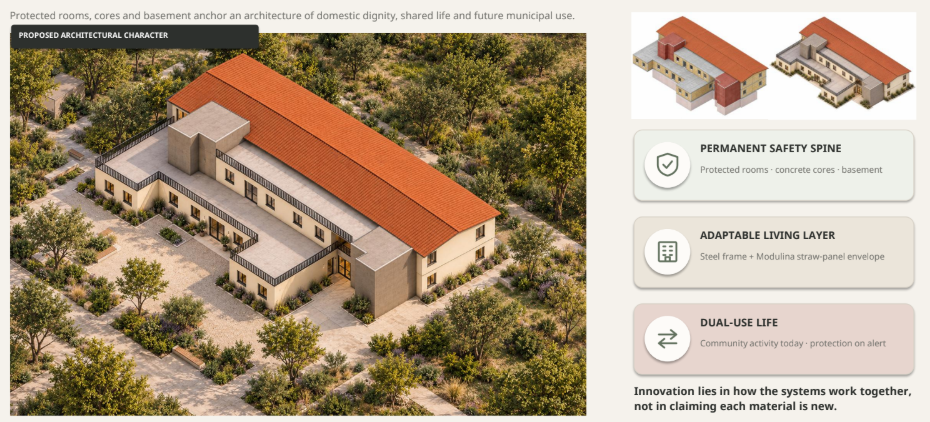
Konotop Short-Stay Shelter

Dignified and Adaptable Housing for Displaced Families

Project imageVisualization of the Konotop Short-Stay Shelter

The Konotop project addresses the urgent need for safe, dignified temporary accommodation for families displaced by war. It responds to the challenges of limited privacy, disrupted everyday routines and the need for accessible community support.

Proposed Solution

The team designed a municipal short-stay housing pilot integrated with Konotop's existing Territorial Centre. The proposal includes eight private family units of approximately 35 m² each, accommodating up to 32 residents, alongside shared facilities, protected circulation and adaptable community spaces.

The concept also combines everyday social functions with emergency protection, allowing spaces to serve different community needs over time.

Expected Impact

A practical model of temporary housing that restores privacy and independence while offering access to municipal services and adaptable community infrastructure.

  • Dignified Housing
  • Emergency Protection
  • Social Inclusion

5th Place

Bucha, Ukraine

Myrotsky Lakes

Barrier-Free Recreation and Nature-Based Rehabilitation

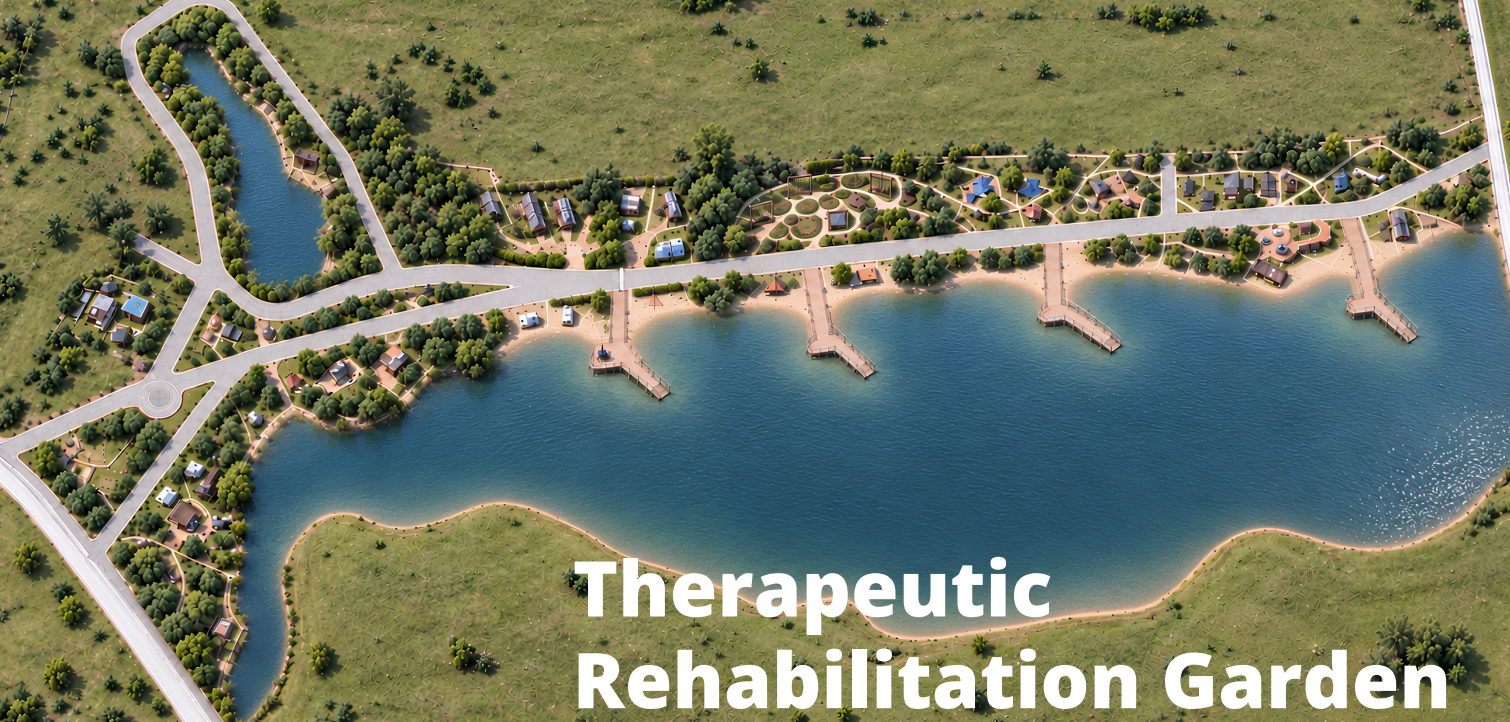
Project imageVisualization of the Myrotsky Lakes project in Bucha

The Myrotsky Lakes project explores the transformation of an underused natural lakeside area into an inclusive public destination for recreation, rehabilitation and community wellbeing.

The proposal responds to the growing need for accessible recovery environments for veterans, displaced people, families and local residents.

Proposed Solution

The team developed a concept for a therapeutic rehabilitation garden integrated into the lake landscape.

The proposal combines accessible pedestrian connections, barrier-free recreational facilities, inclusive accommodation, ecological landscape restoration and opportunities for educational and community activities.

Expected Impact

A nature-based recovery destination that connects physical and emotional wellbeing with environmental protection, social inclusion and sustainable local development.

  • Nature-Based Recovery
  • Universal Accessibility
  • Ecological Restoration

6th Place

Boyarka, Kyiv Region, Ukraine

KOLO — The Circle of Memory

A Community-Built Place for Culture, Memory and Resilience

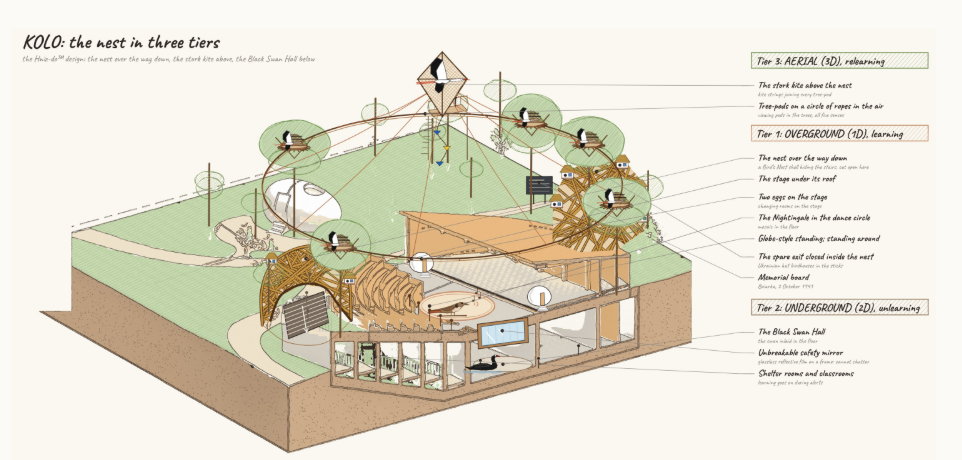
Project imageVisualization of KOLO, the Circle of Memory in Boyarka

KOLO reimagines Boyarka's amphitheatre as a multifunctional cultural environment where memory, performance, creativity and community resilience come together.

The project proposes a place that supports cultural life while remaining useful and protective during periods of disruption.

Proposed Solution

The concept is based on a three-tier spatial system: an open-air performance circle, a protected underground hall capable of supporting cultural and educational activities during emergencies, and elevated learning spaces connected to the surrounding trees.

The approach integrates local natural materials, community participation and opportunities for artistic and educational programmes.

Expected Impact

A resilient cultural landmark that strengthens community identity, preserves collective memory and creates new opportunities for learning, creativity and public participation.

  • Cultural Resilience
  • Community Participation
  • Adaptive Architecture

7th Place

Tereshky Territorial Community, Ukraine

Emerald Scythia

Connecting Cultural Heritage, Nature and Community Tourism

Project imageVisualization of the Emerald Scythia project in Tereshky

Emerald Scythia transforms the historical and natural potential of the Tereshky community into a connected cultural and educational destination.

The project draws on the region's archaeological heritage, Scythian history, local traditions and natural landscapes to create new opportunities for residents and visitors.

Proposed Solution

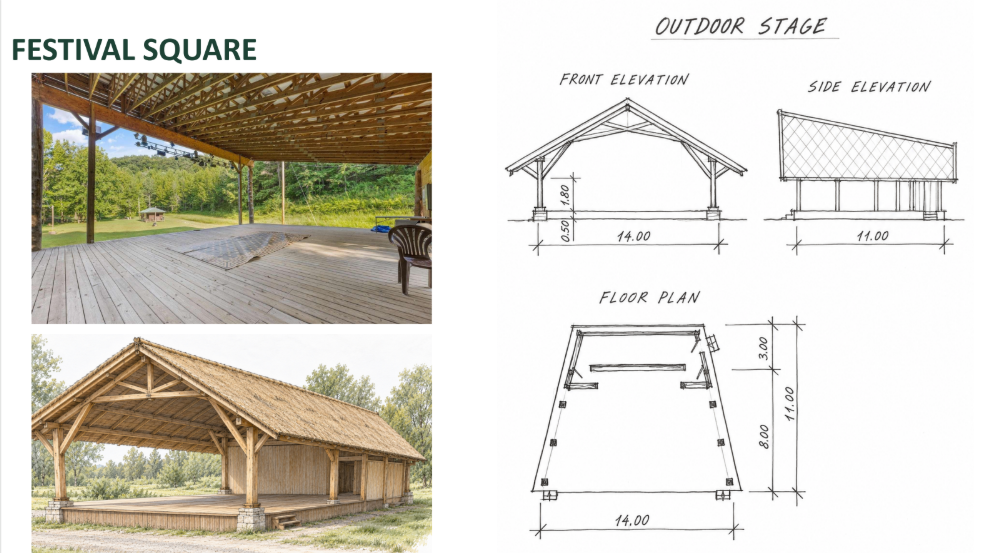
The concept combines a Scythian-inspired workshop house, a community festival square, interconnected eco-trails and a digital visitor platform with interactive maps and historical content.

It brings together local crafts, cultural events, educational activities and opportunities for small businesses.

Expected Impact

A community-led cultural tourism model that preserves local identity, creates opportunities for entrepreneurs and supports social connection and sustainable regional development.

  • Cultural Heritage
  • Eco-Tourism
  • Community Development